
Your skin doesn't stay healthy because of a few special molecules. It relies on thousands of them. Peptides, proteins, fats, sugars and molecular signals… all working together. We harvest all of them from thriving cells that came from one Pacific salmon years ago.
That's MCC: the complete environment cells actually live in, not just a few individual ingredients. Most “actives” are one purified compound; MCC is the whole recipe.

Explore the scientific wonder of this complex below.
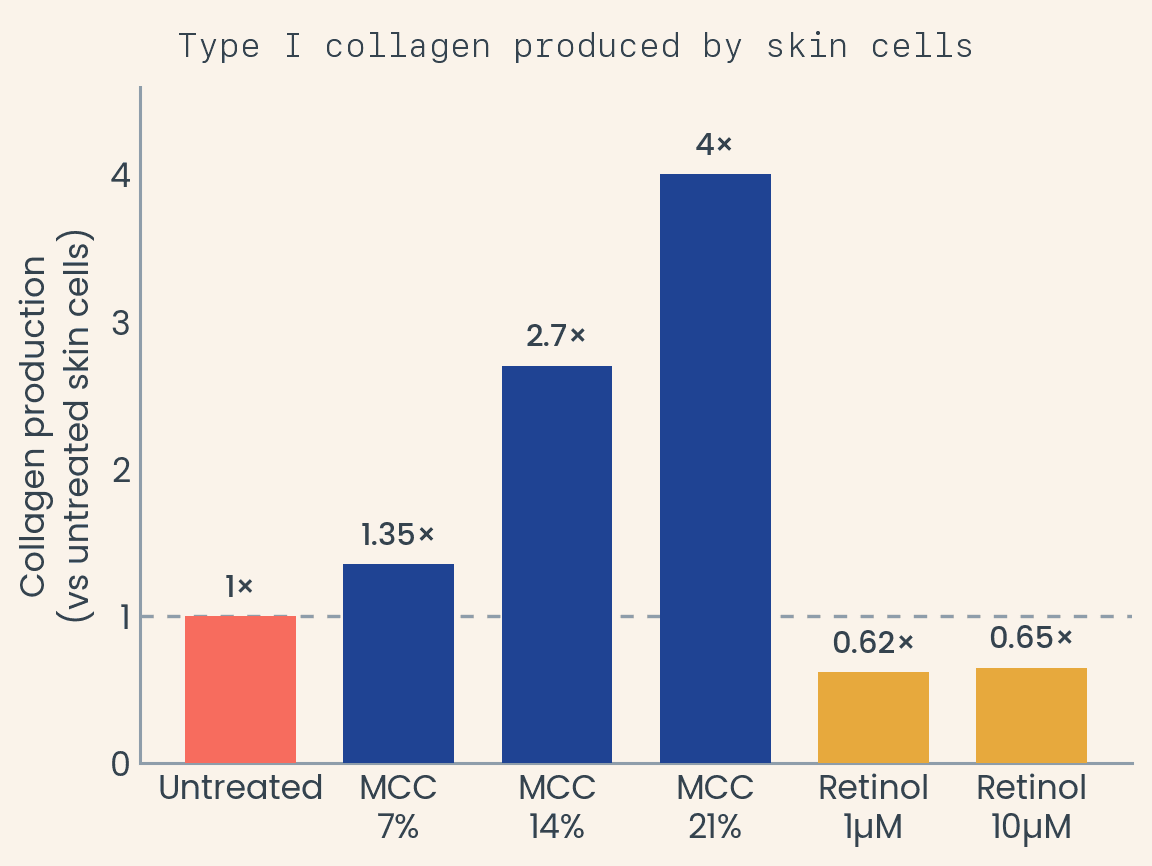
Collagen is the protein that keeps skin firm and plump (the protein structure just beneath the surface). Your cells make less of it every year, which is how fine lines and sagging begin.
In lab tests on human skin cells, MCC flipped the switch on collagen production: up to 4× more Type I collagen than untreated cells, and about 6× more than retinol (the gold standard for anti-aging bioactives) without retinol's familiar irritation.
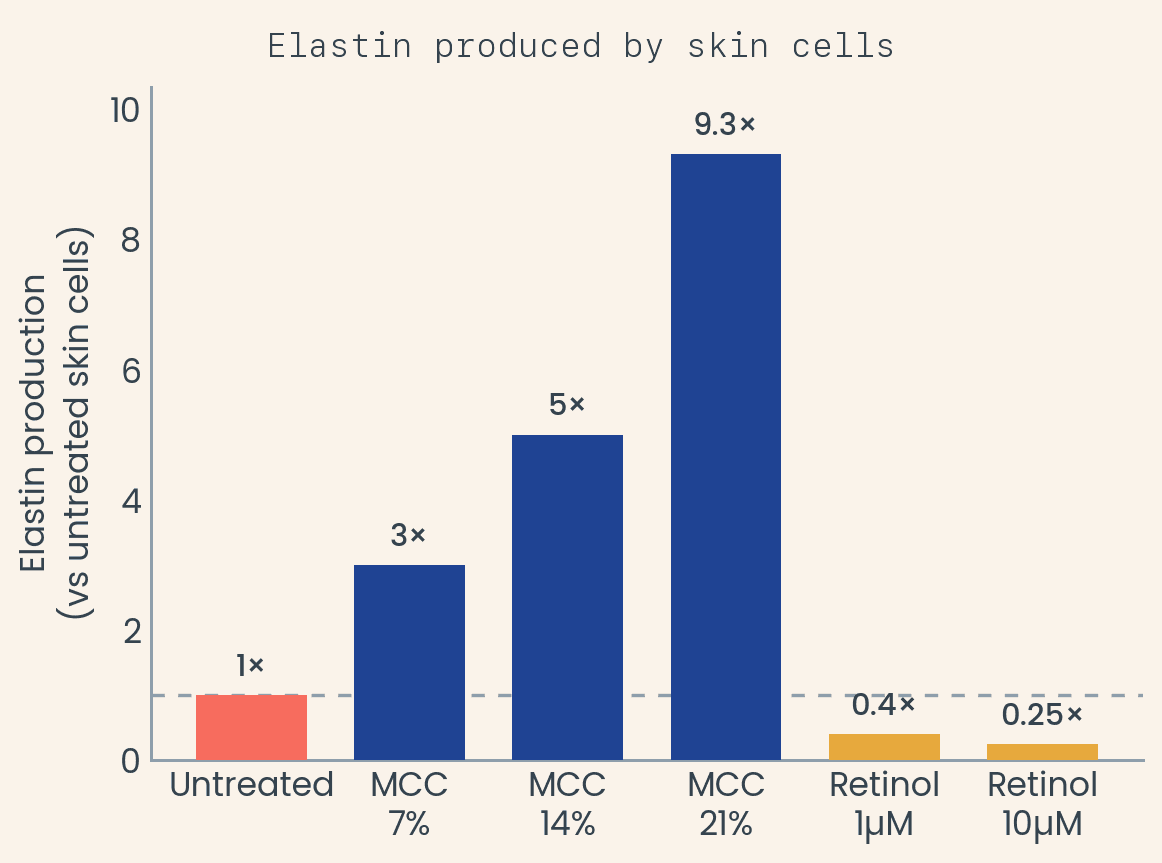
If collagen is the structure, elastin is the spring: the protein that lets skin snap back after a smile or a pinch.
It's notoriously hard to stimulate our cells to make more of it, and most ingredients (retinol included) barely move it.
MCC raised elastin production up to 9× compared with untreated skin cells.
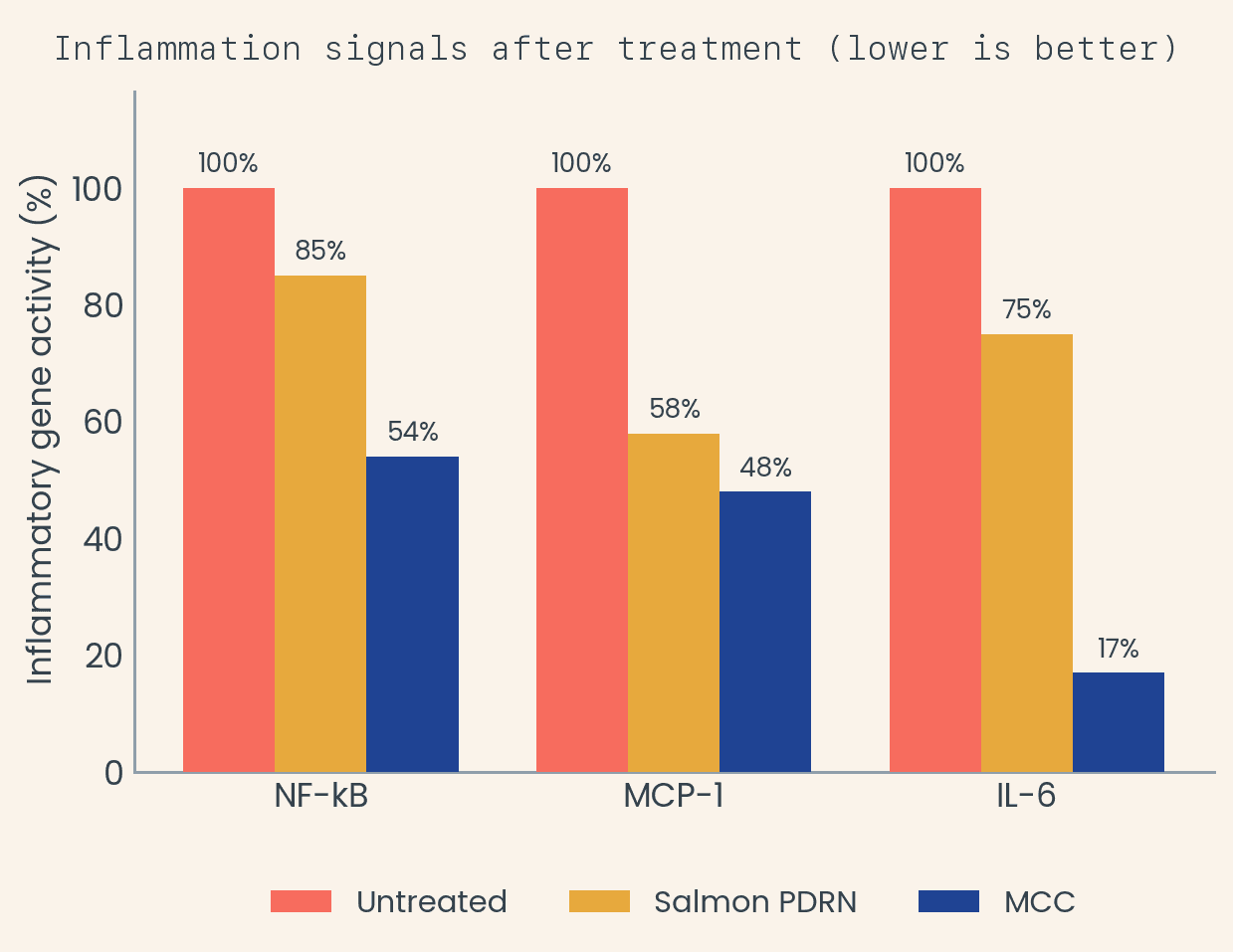
A lot of visible aging and redness is driven by low-grade inflammation, sometimes called “inflammaging.”
We measured three of the skin's main inflammation signals and compared MCC against salmon PDRN. MCC quieted all three even further, cutting IL-6 (a key inflammatory messenger) by 83% versus 25% for PDRN.
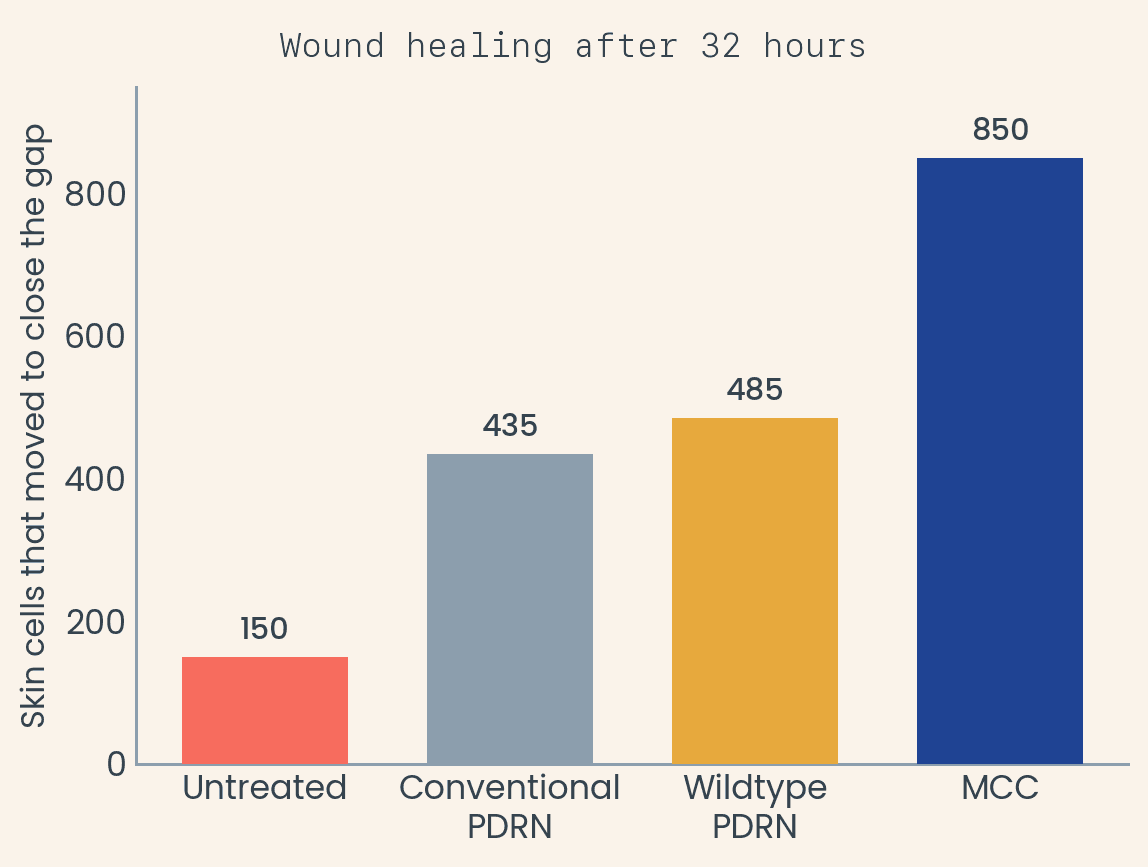
To test repair, we grow a sheet of skin cells, make a clean scratch through it, and watch how quickly the cells crawl in to close the gap (a gold standard test for wound healing).
After 32 hours, the gap treated with MCC had far more cells move in than untreated skin or either form of PDRN: roughly 2× more than PDRN, and about 5× more than no treatment.
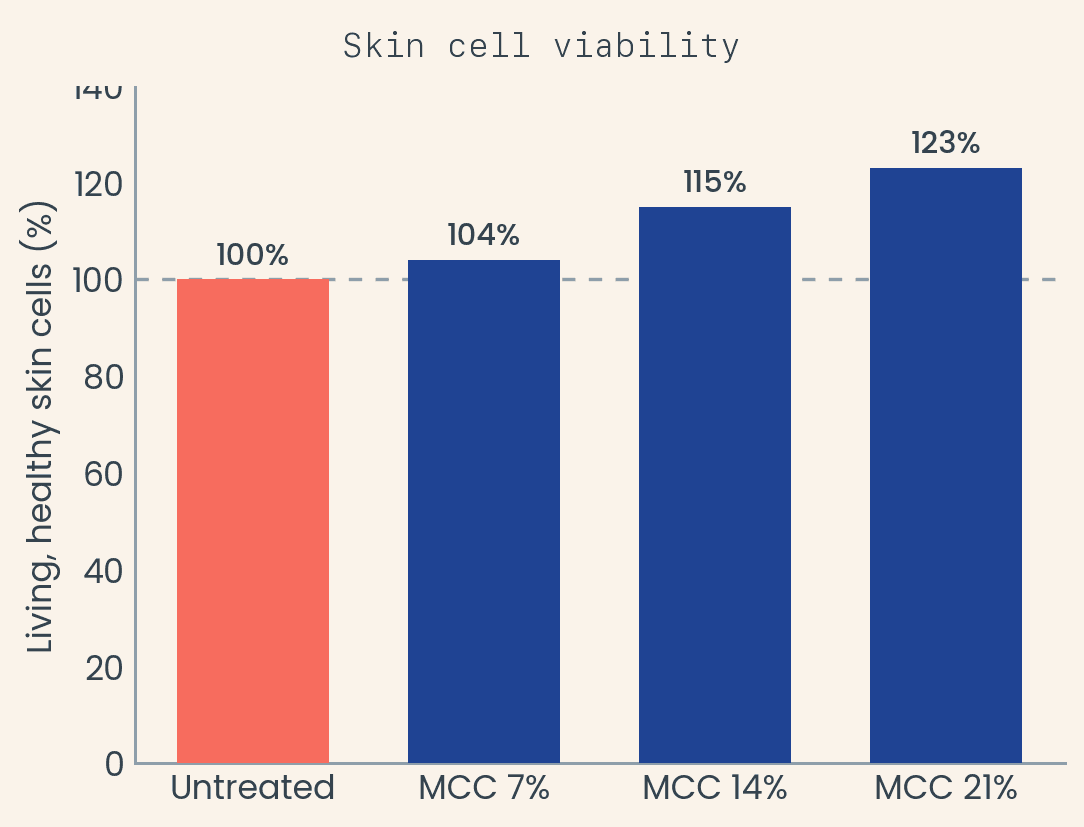
Healthy, living cells are the foundation of glowing skin. As we age, more of them slow down or die off. In an independent lab test, adding MCC increased the number of living, healthy skin cells by up to 23% versus untreated cells. We think of “untreated” as plain water as the base of most cosmetics. It's clear that the more MCC is added, the better.
Exosomes are tiny bubbles (far smaller than a cell) that cells use to send messages and cargo to one another. Think of them as nature's delivery trucks: they wrap up growth factors and instructions, protect them, and carry them where they need to go. That delivery system is a big reason MCC's signals actually reach your skin, and MCC is naturally packed with them.
You can find out what specific peptides and proteins are found in MCC exosomes by asking the MCC Explorer below.
We sent MCC to an independent lab and used mass spectrometry to catalog what's inside.
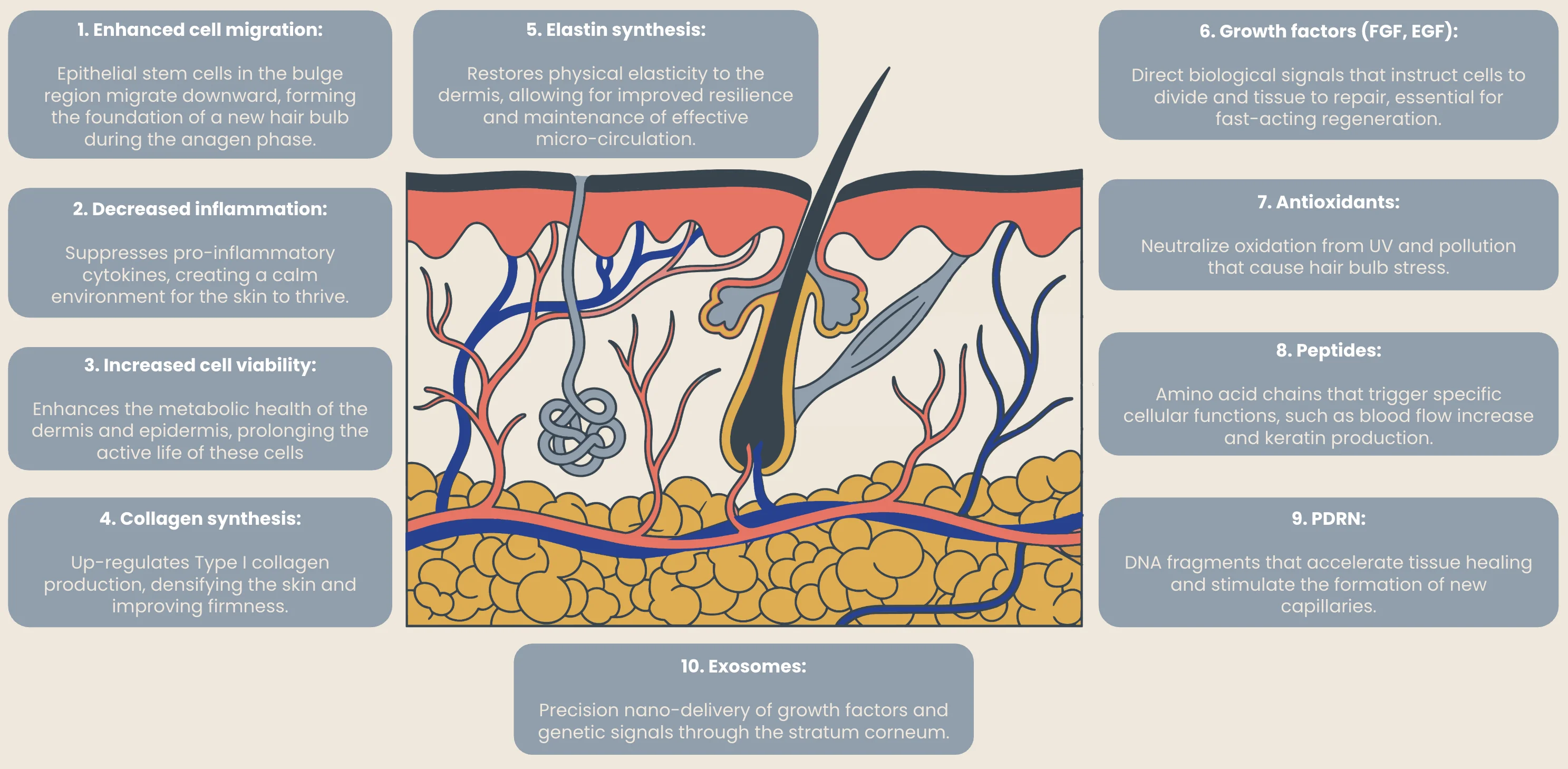
The count so far: 15,540 different peptides and 5,105 different proteins, in addition to marine collagen, antioxidants and salmon PDRN. A few of the standouts are listed below:
Growth factors & signals
| TGF-β family | Orchestrates repair and tells fibroblasts to build collagen. |
| IGF (insulin-like) | Supports cell growth and helps calm inflammation. |
| EGF family | Signals skin cells to renew and repair the surface. |
| FGF & VEGF | Support firmness and healthy micro-circulation. |
| HGF | Drives tissue renewal and wound repair. |
Structure & matrix proteins
| Type I & XII collagen | Firmness and the scaffolding under your skin. |
| Fibrillin & elastin-related | Elasticity and bounce. |
| Laminin & fibronectin | The "glue" that holds skin layers together. |
| Decorin & thrombospondin | Organize and fine-tune the support matrix. |
| Keratins | Building blocks of a strong skin barrier. |
Below are representative results using MCC:
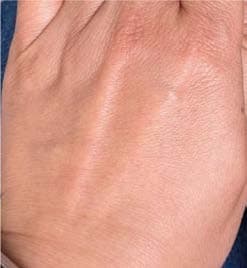
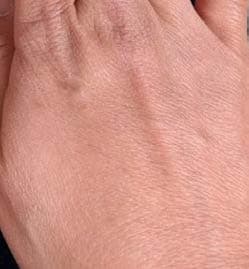
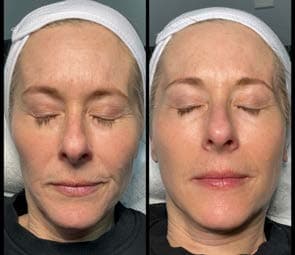
Further clinical studies are currently underway; results will be published as they become available.
MCC science is unique because it's still evolving. We're learning more about MCC each day, with the help of our community of scientists, physicians, formulation experts, brands, and most importantly, our fans! We're always looking for new things to study within its vast complexity; try our MCC Explorer below to make your own AI-assisted discoveries within our vast scientific datasets.
If you're interested in a topic that isn't described here, please reach out. We're always grateful for our community's scientific ideas and curiosity.
Ask your own questions to explore:
Discover the science inside your skincare.
Ask anything about the proteins, peptides, biological activity, or technical data related to Marine Cellular Complex. Try clicking one of the suggested topics below or type your own question:
- 1Squadrito F, Bitto A, Irrera N, et al. “Pharmacological Activity and Clinical Use of PDRN.” Front Pharmacol. 2017;8:224. PubMed
- 2Colombo M, Raposo G, Théry C. “Biogenesis, secretion, and intercellular interactions of exosomes and other extracellular vesicles.” Annu Rev Cell Dev Biol. 2014;30:255–289. PubMed
- 3Théry C, Witwer KW, Aikawa E, et al. “Minimal information for studies of extracellular vesicles 2018 (MISEV2018).” J Extracell Vesicles. 2018;7(1):1535750. PubMed
- 4Mehta RC, Fitzpatrick RE. “Endogenous growth factors as cosmeceuticals.” Dermatol Ther. 2007;20(5):350–359. PubMed
- 5Alquraisy A, Wilar G, Suhandi C, et al. “A Comprehensive Review of Stem Cell Conditioned Media Role for Anti-Aging on Skin.” Stem Cells Cloning. 2024;17:5–19. PubMed
- 6Naughton GK, Jiang LI, Makino ET, et al. “Targeting Multiple Hallmarks of Skin Aging: Efficacy of a Growth Factor–Based Skin Care Serum.” Dermatol Ther (Heidelb). 2022;13(1):169–186. PubMed
- 7Kwon TR, Oh CT, Choi EJ, et al. “Conditioned medium from human bone-marrow MSCs promotes skin moisturization and effacement of wrinkles in UVB-irradiated mice.” Photodermatol Photoimmunol Photomed. 2015;32(3):120–128. PubMed
- 8Noh CH, Park S, Seong HR, et al. “An Exosome-Rich Conditioned Medium from Human Amniotic Membrane Stem Cells Facilitates Wound Healing via Reepithelialization, Collagen Synthesis, and Angiogenesis.” Cells. 2023;12(23):2698. PubMed
- 9Chien WY, Huang HM, Kang YN, et al. “Stem cell-derived conditioned medium for alopecia: a systematic review and meta-analysis.” J Plast Reconstr Aesthet Surg. 2023;88:182–192. PubMed
- 10Shin H, Won CH, Chung WK, Park BS. “Clinical Trials of Hair Regeneration Using Conditioned Media of Adipose-Derived Stem Cells in Pattern Hair Loss.” Curr Stem Cell Res Ther. 2017;12(7):524–530. PubMed
- 11Ahangar P, Mills SJ, Smith LE, et al. “Human gingival fibroblast secretome accelerates wound healing through anti-inflammatory and pro-angiogenic mechanisms.” NPJ Regen Med. 2020;5:24. PubMed
- 12Kuncorojakti S, Pratama AZA, Antujala CA, et al. “Adipose mesenchymal stem cell secretome accelerates healing of cutaneous burn wounds.” Vet World. 2024;17(7):1545–1554. PubMed
- 13Nifontova G, Safaryan S, Khristidis Y, et al. “Advancing wound healing by hydrogel-based dressings loaded with cell-conditioned medium: a systematic review.” Stem Cell Res Ther. 2024;15(1):371. PubMed